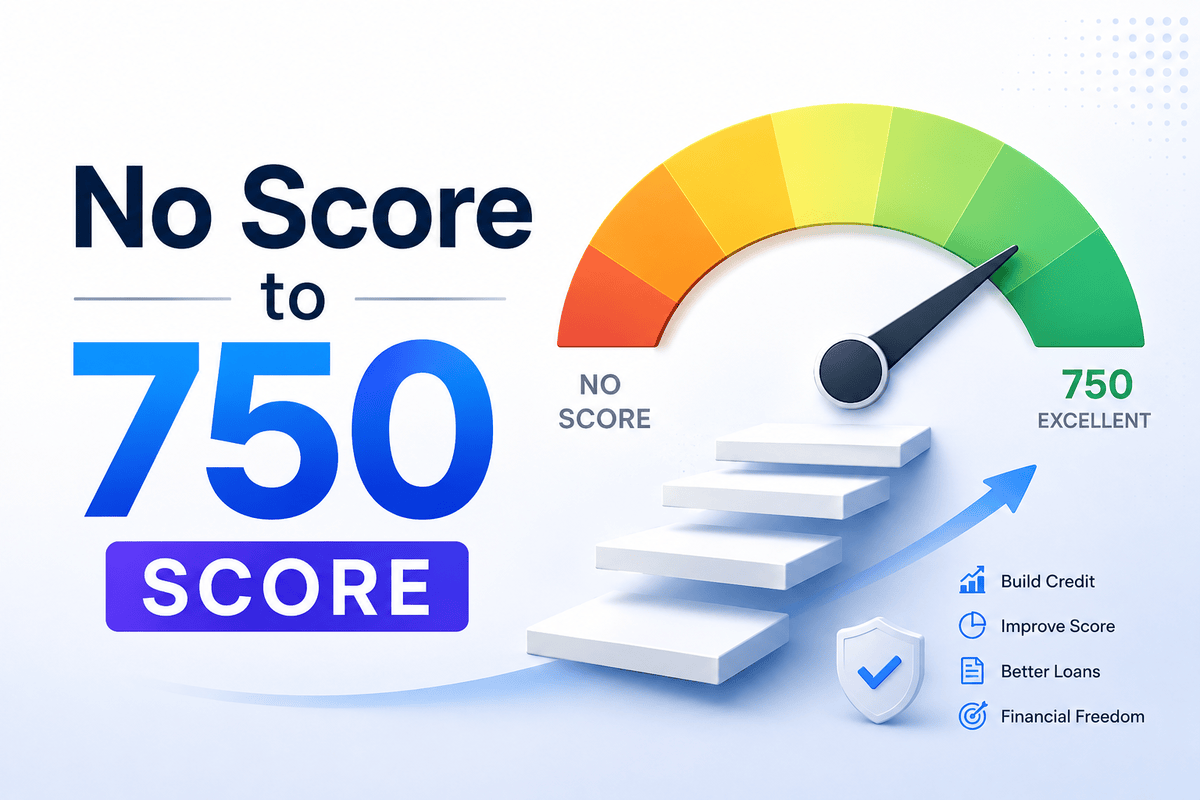
From No Score to 750: A Realistic Roadmap to Build Your Credit Score
❤️ Spread the Love
If you have never borrowed before, you may find yourself in a frustrating situation: you need a credit history to qualify for credit, but you seem to need credit to create that history in the first place. The good news is that you can build a credit profile from scratch, but it takes consistent behaviour rather than a quick fix.
Aiming for 750 can be a useful long-term goal, but no lender or credit bureau can guarantee that you will reach a particular number within a fixed period. Your progress depends on your repayment behaviour, credit utilisation, length of history, credit mix, recent applications and the information reported about you.
Can You Build a 750 Credit Score From No Credit History?
Yes, you can build a strong credit score from scratch, but it takes time. A practical roadmap is to establish your first reported credit account, build several months of positive repayment history, keep your credit usage controlled and avoid unnecessary applications.
The brief estimates that a positive credit profile can begin appearing within 3 to 6 months, 700+ may be realistic around 6 to 9 months, and reaching 750+ may take 12 to 18 months with disciplined credit management. These are planning milestones, not guaranteed score outcomes.
The reason is simple: credit scores are based on information accumulated over time. RBI also notes that credit scores are generated by credit information companies using their own scoring methodologies, which means there is no single universal formula or guaranteed path to a particular score.
Why Do You Have No Credit Score?
Having no credit score does not necessarily mean you have poor credit. If you have never had a credit card or loan that was reported to a credit information company, there may simply be insufficient credit history to generate a score.
You may see terms such as NA or NH when checking your credit information. These generally indicate that there is not enough relevant credit history available to calculate a score.
This is different from having a low score. A low score reflects negative or weaker information in your credit history, whereas having no score can simply mean that your credit journey has not started yet.
That distinction matters because the solution is not to repair damaged credit. It is to start creating a reliable credit history.
The Five Things That Shape Your Credit Score
Building towards 750 is not about finding one special credit product or making one large payment. It is about consistently demonstrating that you can manage borrowed money responsibly across several aspects of your credit profile.
1. Payment History
Your repayment behaviour is one of the most important parts of building a positive credit profile because lenders and credit information companies can see whether your reported credit obligations have been paid on time.
If you have a credit card or loan, make every payment by its due date. A single missed payment can be more damaging than several months of otherwise good behaviour can compensate for.
2. Credit Utilisation
Credit utilisation describes how much of your available revolving credit you are using. For example, if your card has a ₹50,000 limit and you have ₹10,000 outstanding, your utilisation is 20%.
Keeping utilisation low demonstrates that you are not heavily dependent on your available credit. The brief recommends staying below 30%, while using considerably less can provide a more conservative approach.
3. Age of Your Credit History
Credit history needs time to develop because lenders benefit from seeing how you manage credit over a longer period rather than judging your behaviour from a single month.
This is why repeatedly opening and closing accounts is not a sensible shortcut to a higher score. A well-managed account that remains active over time can contribute to a deeper credit history.
4. Credit Mix
Credit mix refers to the different types of credit appearing in your history, such as secured and unsecured credit. A healthy mix can contribute to your overall credit profile, but you should never take a loan simply to create a particular mix.
The better approach is to use credit only when it genuinely fits your financial needs and repayment capacity.
5. Recent Credit Applications
Every time you apply for credit, the lender may make an enquiry that can appear on your credit report. Multiple applications within a short period can make your credit profile look more credit-seeking.
Spacing applications apart is therefore a sensible habit when you are building your first credit profile. The brief recommends leaving around 3 to 6 months between applications rather than applying repeatedly.
From No Score to 750: Your 18-Month Roadmap
A timeline makes the process easier to understand because building credit is gradual rather than something that happens immediately after receiving your first card or loan. Think of each phase as a milestone, not a guaranteed score target.
Phase | Timeline | Main Goal | Possible Milestone |
Phase 1 | 0–6 months | Start your first reported credit account and establish on-time payments | First positive credit history / initial score |
Phase 2 | 6–12 months | Maintain perfect repayment behaviour and controlled utilisation | 700+ may be achievable for some borrowers |
Phase 3 | 12–18 months | Protect your history, maintain low utilisation and avoid unnecessary applications | 750+ may be achievable for some borrowers |
These milestones are based on the roadmap in the brief and should be treated as realistic planning ranges rather than promises. Credit scoring models are proprietary, and your actual score can move differently depending on your credit history and reported information.
Phase 1: 0–6 Months — Establish Your Credit History
The first six months are about creating a clean foundation rather than chasing a particular number. Your priority should be to use one suitable credit product responsibly and build a consistent repayment record.
Start with an appropriate product, keep your balances manageable and make every payment on time. Avoid taking multiple products simply because you want your score to appear faster.
Your first score may not appear immediately because the account needs to be reported and sufficient information needs to become available.
Phase 2: 6–12 Months — Build Consistency
Once you have several months of positive repayment history, your focus should shift from starting your credit profile to protecting it. This is where consistency becomes more important than adding new accounts.
Keep your credit utilisation under control, continue paying every bill on time and avoid unnecessary applications. If you already have one well-managed card, there is usually no reason to keep applying for additional cards simply to increase your number of accounts.
The goal during this stage is simple: give your existing positive behaviour time to accumulate.
Phase 3: 12–18 Months — Work Towards 750
After a year of responsible credit use, you have something that cannot be created overnight: a longer record of how you handle credit. At this stage, maintaining good habits matters more than making dramatic changes.
Continue keeping balances manageable, pay on time and apply for new credit only when you actually need it. A 750 target can be realistic for some borrowers during this period, but your individual outcome will depend on your complete credit profile.
Which Credit Product Should You Start With?
There is no single product that guarantees a particular credit score. The right starting point is a product that you can manage comfortably and that reports your repayment behaviour to a credit information company.
For someone starting without a credit history, the brief highlights three possible routes: a secured credit card, a credit builder loan and a salary-linked card.
Secured Credit Card:
A secured card is backed by a fixed deposit and can be an option for people who may not qualify for a conventional credit card because they have little or no credit history.
You use the card like a regular credit card, while the underlying deposit provides security to the issuer. The important part for credit building is not simply having the card; it is using it responsibly and paying the bill on time.
Credit Builder Loan:
A credit builder loan is designed around creating a repayment record. Instead of taking a large loan simply to build credit, the product is structured to help establish a history of regular repayments.
As with any borrowing, the benefit comes from making every repayment on schedule and ensuring the monthly obligation fits comfortably within your budget.
Salary-Linked Card:
If you have a regular salary but limited credit history, you may qualify for certain cards based on your income and banking relationship. Eligibility varies by issuer, so do not assume that having a salary automatically guarantees approval.
If you receive such a card, the same principle applies: use only what you can repay and maintain a clean payment record.
What Should You Do Every Month to Reach 750?
The easiest way to protect your progress is to turn good credit behaviour into a routine rather than trying to fix your score whenever it changes. A simple monthly system can prevent avoidable mistakes.
Before focusing on score milestones, build these habits into your regular financial routine:
Pay every EMI and credit card bill on time: Set up reminders or auto-debit where appropriate, but still check that the payment has actually gone through and that sufficient funds are available.
Keep credit card utilisation comfortably low: A lower balance relative to your available limit can help demonstrate that you are managing your available credit responsibly.
Avoid unnecessary credit applications: If you do not need a new loan or card, there is little benefit in applying simply to see whether you will be approved.
Review your credit report regularly: Checking your report can help you identify inaccurate account information, unfamiliar enquiries or repayment details that need correction.
Give your oldest well-managed accounts time: Credit history cannot be manufactured instantly, so avoid closing a useful account without considering how doing so could affect your overall profile.
Common Mistakes That Can Slow Down Your Journey
Most people trying to build credit do not need more credit products; they need better control over the products they already have. Avoiding a few common mistakes can therefore be more valuable than constantly searching for shortcuts.
Applying for Several Cards at Once: Opening several accounts within a short period can result in multiple credit enquiries and may make your profile appear more credit-seeking.
Spending More Because Your Limit Is Higher: A larger credit limit does not mean you have more money to spend. Increasing your available limit while simultaneously increasing your outstanding balance defeats the purpose of keeping utilisation under control.
Taking a Loan You Do Not Need: Borrowing money purely because someone told you that having more loans will improve your credit score can backfire. Every credit product creates a financial obligation that must be repaid.
Closing Accounts Without Understanding the Impact: Closing an account is not automatically bad, but you should understand how it changes your available credit and overall credit history before making the decision.
Expecting a Score Jump Overnight: Credit building is a process. Even after making a payment, your credit information may take time to be reported and reflected in your credit profile.
How Credit Assist Can Help You Stay on Track
Building credit is easier when you can see what is happening instead of relying on guesswork. Credit Assist is designed to help users understand their credit health, track their progress and make more informed decisions along the way.
Instead of treating 750 as a number to chase, use your credit journey to build better financial habits: understand your report, monitor important changes, stay aware of your repayment behaviour and know what actions can help or hurt your progress.
The goal is not just a better number. It is becoming more confident about managing credit.
Final Takeaway
Going from no credit history to 750 is not about finding a shortcut. Start with one suitable credit product, pay every bill on time, keep utilisation low and give your credit history time to grow. Consistency is what turns a first credit account into a stronger credit profile.
Frequently Asked Questions
How long does it take to build a 750 credit score?
Can I reach 750 in six months?
What is the fastest way to build credit from zero?
How many credit cards do I need to reach 750?
Does a credit builder loan help you reach 750?
About the Author
Khushi Mishra
@khushi.mishra@paymeindia.in
View all posts →