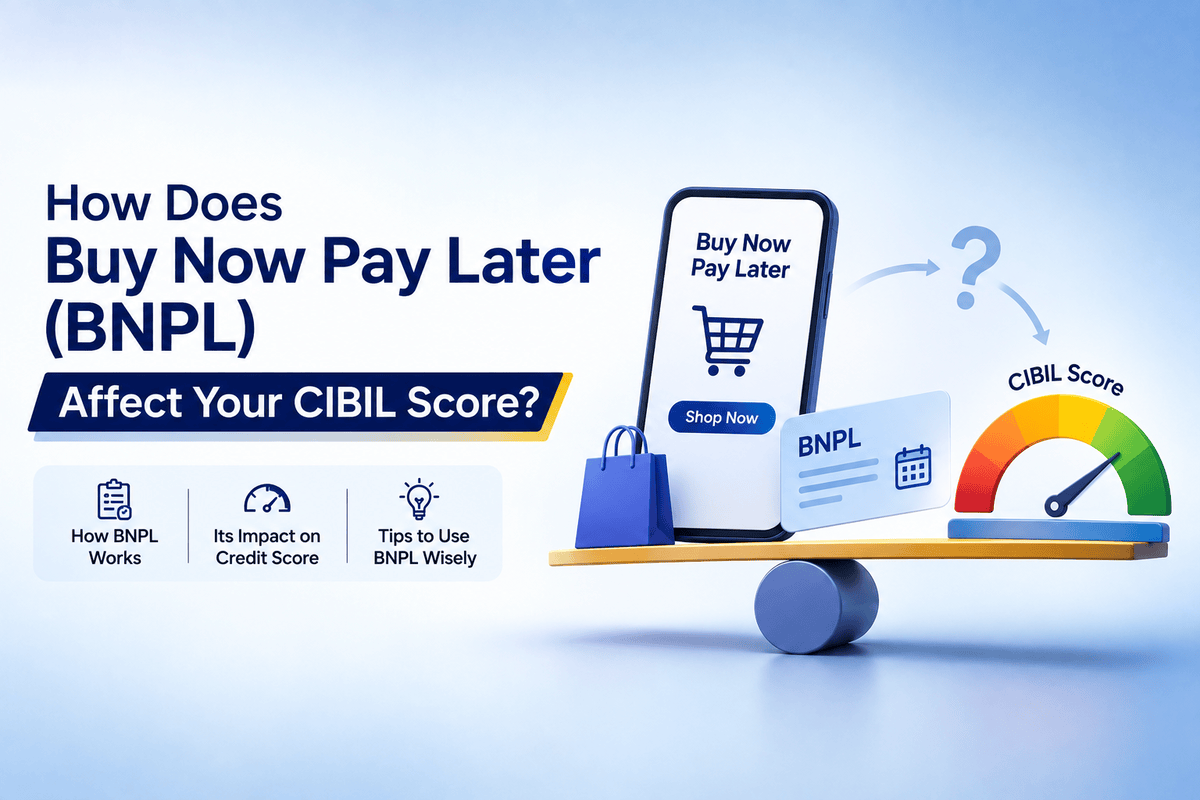
How Does "Buy Now Pay Later (BNPL) Affect Your CIBIL Score?
❤️ Spread the Love
BNPL has quietly become one of the most common ways young Indians pay for things, from a food delivery order to a new phone split into three installments. It feels casual, almost like a payment button rather than borrowing, which is why it catches so many people off guard when a loan rejection later traces back to it. If you have ever wondered, does BNPL affect your CIBIL score, the honest answer is that it usually does, and often more than you would expect.
This guide explains how BNPL is reported, when it works in your favour, when it works against you, and how to use pay later without hurting your credit.
Does BNPL affect your CIBIL score?
Yes, in most cases. When a BNPL provider is registered with the RBI and reports to the credit bureaus, your pay later account and its repayment history appear on your CIBIL report, usually as a small personal loan or credit line. On-time payments can strengthen your score, and missed ones can pull it down.
That single fact surprises a lot of first-time users, who assume pay later sits outside their credit history. It does not.
How BNPL is reported to credit bureaus?
Here is the part most people miss: to a credit bureau, BNPL is a loan. When you use a pay later service, the provider is extending you short-term credit, and if they report to bureaus like CIBIL, Experian, or CRIF High Mark, that account lands on your BNPL credit report entry like any other borrowing.
Most providers report it as a small-ticket personal loan or a revolving credit line. The bureau then sees the limit you have been given, your outstanding balance, and whether each instalment was paid on time. So is BNPL a loan? On your credit file, yes. It is treated as one, even if the app made it feel like a throwaway checkout choice.
This shift is fairly recent. As the RBI brought digital lending and pay later products under closer regulation, reporting to the bureaus became the norm rather than the exception. So the BNPL account you opened a couple of years ago may be recorded differently from one you open today.
When BNPL helps your score:
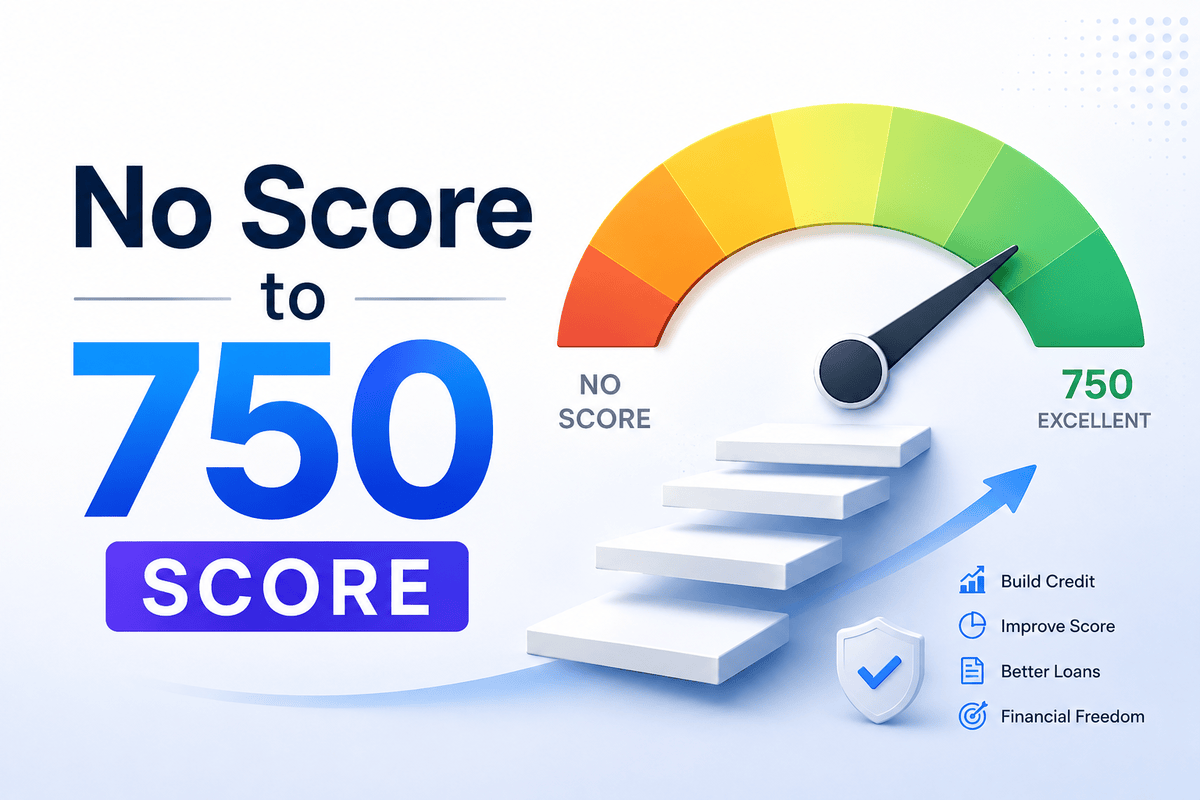
Used well, BNPL can genuinely work in your favour, which is welcome news if you are new to credit and have a thin file. Every instalment you clear on time is a positive entry on your report, and a steady run of small, paid-off purchases shows lenders you can be trusted with credit.
For a first-time borrower with no loans or cards yet, a responsibly used pay later account can be an easy first step towards a score, much like a secured card or a credit builder loan. Someone who clears three small pay later purchases on time over a few months starts to build exactly the kind of track record lenders look for, from a standing start. The operative word is responsible, because this only holds if every payment lands on time.
When BNPL hurts your score:
The same features that make BNPL useful can turn against you the moment repayment slips.
Missed and late payments:
This is the biggest risk. Because these are short-term loans, even a small delay tends to get reported, and a payment you forgot on a ₹1,500 order can leave a negative mark that outlasts the purchase by years. A single slip is often what turns a healthy score soft, and it is a common reason people see their score drop unexpectedly.
Rising credit utilisation:
If your pay later balances climb close to the limit you have been given, your credit utilisation rises. Utilisation is widely estimated to be one of the heaviest factors in a CIBIL score, so this matters. On a modest income, even a few thousand rupees of active BNPL balances can look heavy to a lender. Our guide to the 30% utilisation rule explains how to keep it in check.
Too many BNPL accounts:
This is the quiet one. Running four or five pay later apps at once creates scattered debt that is easy to lose track of, and to a lender it can read as over-reliance on credit. One well-managed account does far more for your pay later credit score than several messy one's ever will.
Does every BNPL app report to CIBIL?
Not always, and this is where it gets a little murky. Not every BNPL provider reports to the bureaus. Some smaller or unregulated services may not, which means using them might not show on your score at all, for better or for worse.
The direction of travel, though, is clearly towards reporting. As the RBI has tightened its oversight of digital lending, most established, RBI-registered BNPL providers now share repayment data with the bureaus. The safe assumption today is that if you are using a well-known pay later service, it is on your credit file. The only way to be sure is to check your own credit report and see which accounts appear and how they are recorded.
Does BNPL count against you on a loan application?
There is a second way BNPL can affect your borrowing, separate from your score itself. When you apply for a bigger loan, lenders look at how much of your income already goes towards repayments. Active BNPL balances count here, much like a regular EMI. So even if your score is healthy, several running pay later commitments can eat into the income a lender is willing to lend against and shrink the amount you qualify for.
If you are planning a large application, such as a home or personal loan, it is worth clearing your pay later balances first. So, when people ask does BNPL affect your credit score and their loan chances, the fuller answer covers both: the score on your report, and the borrowing room you have left.
How to use BNPL safely?
You do not need to swear off BNPL to protect your score. A few simple habits do the job.
Treat it like the loan it is and only buy what you could afford to pay for anyway. Automate or note down every due date, so a missed payment never happens by accident; this one habit guards against the biggest risk. Keep to one or two apps rather than spreading small balances across many, since that is easier to track and reads better on your report. Watch your balances so the total you owe stays well below the limits you have been given. And glance at your credit report now and then to see how your accounts are being recorded, especially before you plan to apply for a bigger loan.
Conclusion:
So, does BNPL affect your CIBIL score? In most cases, yes, because to a credit bureau your pay later account is simply another loan. That is not a reason to avoid it, but it is a reason to respect it. Paid on time and kept to a sensible number of apps, BNPL can even help you build credit. Left unmanaged, it can quietly drag your score down before you have noticed.
The smartest move is to know exactly where you stand. Credit Assist shows you how your BNPL and other accounts are shaping your score, so a convenient checkout never becomes an unwelcome surprise on a loan application.
Frequently Asked Questions
Does BNPL affect your CIBIL score?
Is BNPL considered a loan?
Does a missed BNPL payment lower my score?
Do all BNPL apps report to CIBIL?
Can BNPL help build my credit score?
About the Author
Khushi Mishra
@khushi.mishra@paymeindia.in
View all posts →