What Is a NACH Mandate and Why Does It Fail?
❤️ Spread the Love
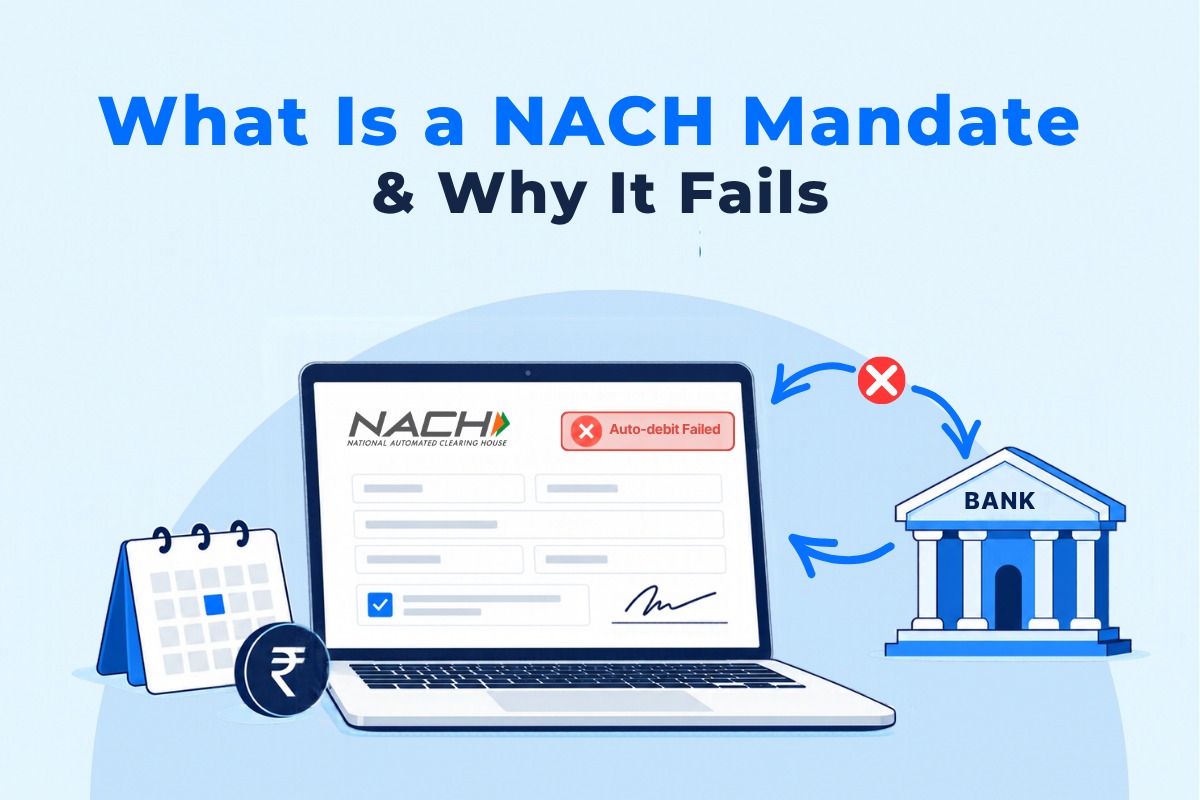
A NACH mandate is an authorisation that allows a lender, insurer or other biller to automatically debit recurring payments, such as loan EMIs, SIPs and insurance premiums, from your bank account. A NACH payment can fail because of insufficient funds, incorrect mandate details, an inactive account or a processing issue. If the failure leads to a missed loan EMI, it may also affect your credit history.
What Is a NACH Mandate?
NACH stands for National Automated Clearing House, a system developed by the National Payments Corporation of India (NPCI) to process recurring electronic payments. A NACH mandate gives the designated organisation permission to collect payments from your bank account according to the agreed instructions.
You may have authorised a NACH mandate when taking a personal loan, starting a systematic investment plan (SIP), or setting up regular insurance premium payments. Once the mandate is registered, the organisation can initiate the scheduled debit without requiring you to make each payment manually.
NACH is related to the older Electronic Clearing Service (ECS), which was also used for recurring payments. Although the terms may appear together in banking communications, the important point for you is to check whether the mandate is active, the account is operational and enough money is available on the debit date.
Why Does a NACH Payment Fail?
A NACH payment usually fails when the bank cannot process the scheduled debit because of a balance shortage, a mandate problem, account restrictions or incorrect details. Identifying the reason helps you resolve the immediate payment issue and avoid repeated return charges.
Common reasons for a NACH mandate failure include:
Insufficient bank balance: The account does not have enough available funds to cover the EMI, SIP or other scheduled payment.
Expired, cancelled or unregistered mandate: The authorisation may not be active when the organisation attempts to collect the payment.
Incorrect bank details: An incorrect account number, IFSC or other mandate information can prevent the debit from being processed.
Inactive, frozen or closed account: The bank may reject the transaction if the account cannot be debited.
Mandate authorisation error: The mandate may have been rejected during registration or may contain information that does not match the bank’s records.
Transaction limit or bank restriction: The debit may exceed an applicable limit or be blocked by an account-level restriction.
Technical processing issue: A temporary problem with the bank or payment-processing system can cause a failure even when the account has sufficient funds.
If your balance is adequate, do not assume the bank has made an error. Check the failure notification for the return reason, then confirm the mandate status with your bank or the organisation collecting the payment.
What Are NACH Bounce Charges?
NACH bounce charges are fees that may be levied when a scheduled auto-debit fails. The amount depends on the bank’s published schedule of charges and the lender’s terms, so check both before assuming that every failed transaction will cost the same.
The brief uses an indicative range of ₹200–₹500 per failed attempt. This is not a universal or regulated fee: actual charges vary by institution, account type, transaction and the reason for failure. A lender may also impose applicable late-payment or overdue charges when a loan EMI is not paid by its due date.
For example, if a scheduled EMI debit fails, you may face a bank return charge and a separate charge under your loan agreement. These are different costs. Check your account statement and loan terms to understand which charges have been applied and why.
If you believe a fee is incorrect, ask the bank or lender for an itemised explanation. Some institutions may consider a reversal under their policies, but a refund is not guaranteed.
Does a NACH Failure Affect Your CIBIL Score?
A failed NACH debit does not automatically mean your credit score will fall. The key issue is whether the failed transaction results in a missed or delayed repayment that the lender reports to a credit bureau.
If your loan EMI remains unpaid after the failed debit, the lender may report the missed payment or overdue status. Your credit report may then show a delay in repayment, and repeated unpaid instalments can create a more serious record. A failed debit for a SIP or insurance premium does not, by itself, mean a missed loan repayment has been reported.
Your credit report may also record days past due (DPD), which indicate how long a repayment has remained overdue. The reporting treatment depends on the account and the lender’s submitted information, so do not assume that every NACH return appears as a credit default.
If a payment failed but you paid the EMI promptly, keep the receipt and confirm that the lender has received and recorded the payment. Check your report later to ensure the account information is accurate.
What Should You Do After a NACH Payment Bounces?
After a NACH payment fails, identify the return reason, arrange payment of any outstanding amount and contact the lender if the mandate needs correction. Acting quickly can help limit additional charges and reduce the risk of a missed EMI remaining unpaid.
Follow these steps:
Check the failure message. Read the SMS, email or banking notification to find the reason for the failed debit.
Fund your account if the balance was insufficient. Keep enough available money for the overdue payment and any other scheduled debits.
Contact the lender or biller. Confirm the amount due, the accepted payment method and whether a manual payment is required.
Pay the outstanding amount promptly. Do not assume the bank will automatically retry the debit. Ask the lender whether another attempt is scheduled.
Resolve mandate errors. If the mandate has expired, been cancelled or contains incorrect details, follow the bank’s or lender’s process to update or register it again.
Keep proof of payment. Save the transaction receipt and request confirmation that the payment has been credited to your loan account.
Review your credit report if an EMI was missed. If the account is reported incorrectly after payment, raise the issue with the lender and follow the credit bureau’s dispute process.
A quick correction can prevent a one-off payment problem from becoming a longer repayment issue. However, paying after the due date does not guarantee that any already-reported delay will automatically be removed.
How Can You Prevent Future NACH Failures?
You can reduce the risk of another NACH bounce by keeping enough funds available before the debit date, monitoring mandate status and responding to bank notifications. These small checks are particularly useful when several EMIs, SIPs or insurance premiums fall due around the same time.
Use the following routine:
Maintain a buffer in the linked account rather than funding it at the last minute.
Note the due dates and expected amounts of recurring debits.
Enable bank SMS and email alerts so you can identify a failed transaction promptly.
Keep your bank account active and update details when your banking arrangements change.
Confirm that a new or amended mandate has been accepted before relying on it for a payment.
Review statements for return charges and unexpected debits.
If your salary arrives close to the EMI date, consider keeping the repayment amount in the account beforehand. Do not rely on a retry unless your bank or lender confirms that one will take place.
How Credit Assist Can Help You Monitor Credit Health
Credit Assist can help you review your credit health and understand the areas of your profile that may need attention. After an EMI payment issue, reviewing your credit report can help you check whether the loan account and repayment information appear accurate.
A practical credit score improvement plan starts with paying overdue amounts, maintaining a consistent repayment routine and correcting reporting errors where necessary. A Credit builder approach is about building responsible habits over time, not taking on more debt to compensate for a missed payment.
If you are working to Improve Your Credit, focus on the actions you can control: pay obligations on time, monitor your credit information and follow up with the lender if an entry appears incorrect. Credit Assist can support that process by helping you understand your credit profile.
Conclusion
A NACH failure is a payment problem that needs prompt attention, not a reason to panic. Check the cause, clear any unpaid EMI, resolve mandate errors and monitor your credit report to ensure repayment information is accurate.
Frequently Asked Questions
What Is a NACH Mandate?
Why Did My NACH Payment Fail?
What Are NACH Bounce Charges?
Does a NACH Failure Affect My CIBIL Score?
How Do I Fix a Bounced NACH Payment?
About the Author
Khushi Mishra
@khushi.mishra@paymeindia.in
View all posts →