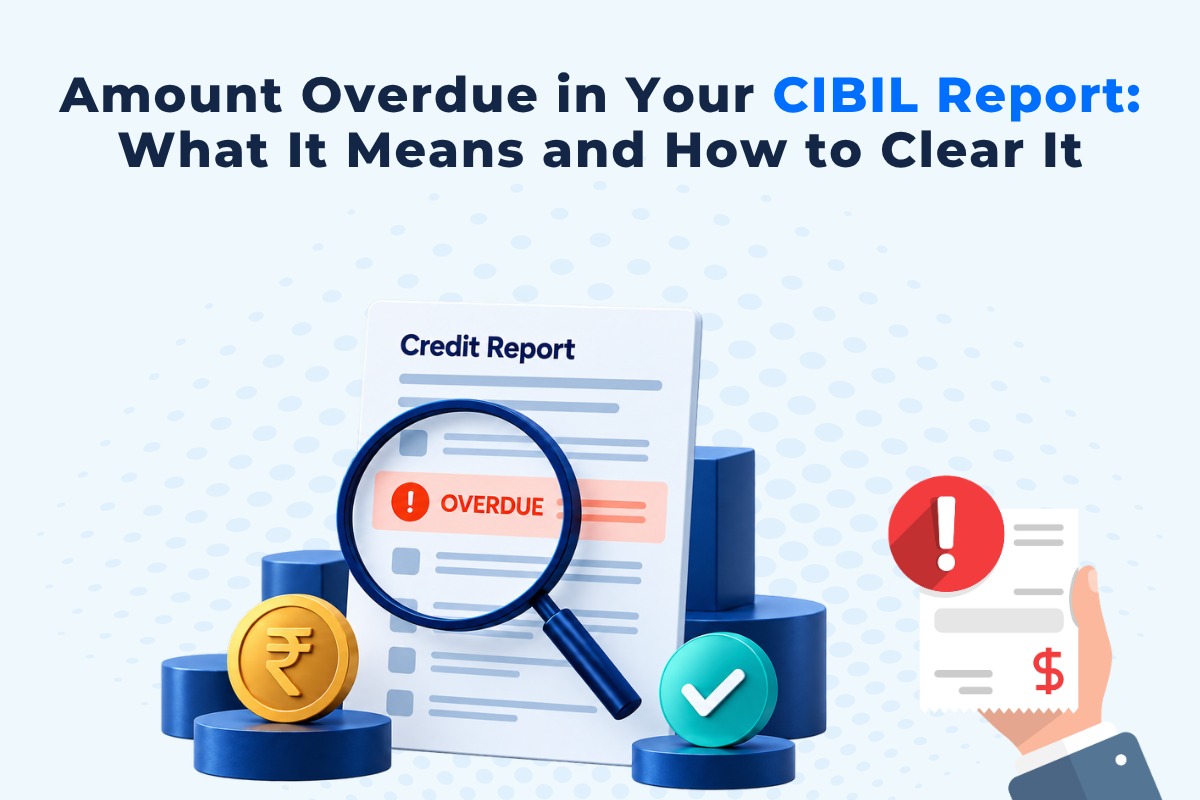
Amount Overdue in Your CIBIL Report: What It Means and How to Clear It
❤️ Spread the Love
If your CIBIL report shows an overdue amount even after you have paid your loan or credit card dues, the entry may not have been updated yet. Lenders usually submit account information to TransUnion CIBIL every 30–45 days. The key is to check the reported date, confirm the payment with your lender and raise a dispute if the information remains incorrect beyond the applicable reporting period.
What Does Amount Overdue Mean in a CIBIL Report?
The amount overdue field reflects the overdue amount reported by your lender for a credit account. It is different from your total outstanding balance, and its value may not change immediately after you make a payment.
For example, imagine you have a personal loan instalment of ₹8,000 that was not paid by its due date. Your lender may report an overdue amount against the account. If you subsequently pay the instalment, the report may continue showing the previous figure until the lender submits updated information.
The account information section of a credit report can include details such as the lender’s name, account status, current balance, amount overdue, date of last payment and monthly repayment history. Review these fields together rather than treating one number as the complete picture of your credit account.
Amount Overdue vs Outstanding Balance
An outstanding balance is the amount that remains payable on a credit account, while the overdue amount relates to payments reported as past due. You can have an outstanding loan balance without having any overdue amount.
Report detail | What it indicates |
Outstanding balance | The balance remaining on the credit account, as reported by the lender |
Amount overdue | The amount reported as overdue on the account |
Account status | The status of the credit facility, as reported by the lender |
Date reported | When the lender last submitted account information to the bureau |
Days Past Due (DPD) | The repayment delay reflected in the account’s payment history |
These fields should be read together. Paying an overdue instalment may bring the current overdue amount to zero, but the remaining loan balance can continue until the loan is fully repaid.
Why Is an Overdue Amount Still Showing After You Paid Your Loan?
An overdue amount may remain visible after payment because the lender has not yet submitted updated information, the report was accessed before the next reporting cycle, or the account details contain an error that needs correction.
TransUnion CIBIL states that credit institutions generally submit data within 30–45 days. If you check your report soon after making a payment, the current balance or overdue amount may not yet reflect the transaction. <Cite refs={["turn541281search0"]} />
Other possible reasons include:
The payment is still being processed: Your payment receipt may be available before the lender’s account records and reporting data are updated.
The lender has not updated the account: The payment may have been received, but the lender’s latest submission may still contain the earlier figures.
The payment was not sufficient to clear all dues: Interest, fees or other amounts payable under your agreement may remain outstanding. Ask the lender for a written breakdown.
The account status is incorrect: A loan may still show an overdue amount or an incorrect status even after the lender has confirmed closure.
The information belongs to an error or discrepancy: Incorrect account details should be raised with the lender and, where appropriate, disputed with the credit bureau.
Before taking action, compare the payment date with the report’s “Date Reported” field. This helps you distinguish a normal reporting delay from an overdue entry that needs investigation.
Should You Wait or Dispute an Overdue Amount?
Check the “Date Reported” field first: if it is less than two months old, a recent payment may not have appeared yet; if it is older than two months and the payment remains missing, TransUnion CIBIL says you can raise a dispute.
Use this decision process before submitting a complaint:
You paid recently and the report was updated less than two months ago: Keep your payment proof and contact the lender if you need confirmation. Check the report again after the lender’s next reporting cycle.
The “Date Reported” is older than two months and the payment is still missing: Contact the lender and raise a dispute with TransUnion CIBIL if the account information remains inaccurate.
The lender confirms that the overdue amount is still valid: Ask for an itemised statement showing the amount due, payment allocation, fees and any unpaid instalments. Pay or challenge the amount through the lender’s formal process.
The lender confirms an error but the report remains unchanged: Request written confirmation and ask the lender to submit corrected information. You can also track the dispute through the bureau’s official process.
This approach helps avoid raising a dispute too early. A dispute is meant to correct inaccurate information, not to remove a valid record simply because the borrower has since paid the overdue amount.
How to Clear an Overdue Amount from Your CIBIL Report
To clear an incorrect overdue amount, confirm what you owe, settle any valid dues, obtain written proof and allow the lender to report the updated information. If the entry remains inaccurate, raise a dispute and track its resolution.
Follow these steps in order.
1. Confirm the Exact Amount Due
Request an updated account statement from your lender and ask whether any instalment, interest or fee remains unpaid. Do not assume that a payment receipt proves the entire account has been cleared; check how the payment was applied.
2. Pay the Valid Outstanding Dues
If an amount is genuinely payable, clear it through the lender’s authorised payment channel. Save the transaction reference, receipt and confirmation. If you disagree with the amount, request a written explanation before deciding how to proceed.
Where possible, pay the amount due in full rather than accepting a settlement without understanding its consequences. A settlement may lead to a different account status from full repayment, depending on the lender’s reporting.
3. Obtain Written Confirmation
Ask your lender for a payment confirmation, updated statement and, where the account has been fully closed, a no-dues certificate or No Objection Certificate (NOC), as applicable. These documents can help establish what was paid and whether the account was closed.
Check that the confirmation identifies the correct account and reflects the relevant payment or closure date. Keep copies of all communications in case the information needs to be corrected later.
4. Check the Next Reporting Cycle
Review your latest credit report after allowing time for the lender’s information to be submitted. Compare the amount overdue, outstanding balance, account status and “Date Reported” field with the documents provided by the lender.
5. Raise a Dispute if the Information Is Still Wrong
If the report continues to show an incorrect overdue amount, submit a dispute through the official TransUnion CIBIL dispute process. Select the account information or field that best describes the error, provide the account details and explain what needs correction.
Attach relevant supporting information where the process permits, such as payment receipts, lender correspondence, statements and the NOC. Keep your dispute reference number and monitor the status until the issue is resolved.
Why Can Only the Lender Confirm a Correction?
TransUnion CIBIL cannot independently change or delete account information supplied by a lender; under the Credit Information Companies (Regulation) Act, 2005, the correction requires confirmation from the concerned credit institution.
This means that contacting the bureau is useful when you identify an error, but the lender remains central to correcting the underlying account data. If the lender confirms the revised information, the bureau can update its records accordingly. <Cite refs={["turn541281search0","turn541281search5"]} />
When raising a dispute, be specific. Instead of asking for an overdue entry to be removed generally, explain whether the current overdue amount is incorrect, the account has been closed but is showing an inaccurate status, or a payment has not been reflected. Accurate details help direct the issue to the relevant account field.
Does Overdue on a Credit Card Differ from Overdue on an EMI Loan?
The reporting principle is similar for both types of credit, but the underlying account works differently: a credit card can have a revolving balance, while an EMI loan follows a repayment schedule set by the lender.
For a credit card, check the amount due, payment allocation and any remaining charges shown on the statement. Paying one amount may not clear the entire overdue balance if other dues remain.
For a personal loan, home loan or other EMI-based facility, check the instalment due date, missed installments and the lender’s outstanding statement. If the loan is fully repaid, confirm that the lender has recorded closure correctly.
In both cases, do not assume that a valid historical late-payment entry should disappear once you pay. Focus first on whether the current amount and account status accurately reflect the lender’s records.
What Should Your NOC or No-Dues Confirmation Include?
A no-dues confirmation should clearly identify the credit account and confirm the relevant payment or closure status. The precise document issued varies by lender, so check that its details match your account and retain it as evidence if a reporting dispute arises.
Where applicable, keep the following information together:
Your name and the lender’s name.
The loan or credit account reference.
Confirmation of full repayment or closure, if applicable.
The date of payment or closure.
The lender’s confirmation or reference number.
A no-dues document is useful evidence, but it does not itself update a credit report. The lender must still submit the corrected account information through its reporting process.
What If the Lender Does Not Correct the Overdue Entry?
If the lender does not resolve an inaccurate overdue entry, escalate the complaint through its grievance redressal process, including the appropriate nodal officer where applicable, and retain copies of every complaint and response.
Start by writing to customer service with the account number, payment evidence, report date and the specific correction requested. If the issue remains unresolved, use the lender’s formal grievance process and ask for a written response.
If the complaint is not resolved satisfactorily, you may be able to approach the RBI Ombudsman under the Reserve Bank of India’s applicable complaint framework, subject to its eligibility and process requirements. Review the official RBI Complaint Management System guidance before filing.
The RBI has also established a compensation framework for delays in rectifying credit information. Under the applicable framework, eligible complaints not resolved within 30 calendar days may attract compensation of ₹100 per calendar day, subject to the rules and eligibility conditions. This is separate from the ₹5,000-per-day compensation that may apply when a regulated lender delays the release of original property documents beyond the prescribed period after full repayment or settlement. <Cite refs={["turn541281search6","turn541281search7"]} />
What Happens If You Leave an Overdue Amount Unresolved?
An unresolved overdue amount can make your credit report less accurate and may affect how lenders assess your repayment behaviour. If the overdue is genuine, leaving it unpaid can also lead to further consequences under the credit agreement and lender policy.
Depending on the account and circumstances, prolonged non-payment may be reflected in the account’s payment history or status. Do not assume that every overdue automatically becomes “written off” or “settled”; these are distinct reporting statuses and should be checked against the lender’s records.
If you have already paid, act on the reporting issue rather than repeatedly making the same payment without clarification. Confirm whether the lender has received and allocated your payment, then follow the reporting and dispute steps above.
How Credit Assist Can Help You Monitor Your Credit Health
Credit Assist can support your ongoing credit-health routine by helping you review your credit information and understand areas that may need attention. Use it as a monitoring and education resource alongside lender statements and official dispute channels, not as a substitute for correcting inaccurate data with the lender.
A practical credit routine includes checking your report periodically, reviewing overdue amounts and account status, keeping payment confirmations, and following up on discrepancies. A Credit builder approach is about building consistent credit habits over time, rather than expecting a single action to remove accurate repayment history.
Credit Assist can help you stay more aware of your credit profile as you work to Improve Your Credit habits. If you notice a score drop, review the underlying report entries and payment history instead of assuming that one particular field caused it. A credit score improvement plan should prioritise timely payments, responsible credit use and the correction of genuine reporting errors.
Conclusion
If your CIBIL report shows an overdue amount after payment, first check the “Date Reported” field and confirm the account details with your lender. Allow the reporting cycle to pass, then dispute inaccurate information with supporting evidence. Correcting the record starts with the lender’s confirmation.
Frequently Asked Questions
What does amount overdue mean in a CIBIL report?
I paid my loan, but CIBIL still shows overdue. Why?
How long does it take for a payment to reflect in a CIBIL report?
How do I remove an overdue amount from my CIBIL report?
What is the difference between outstanding and overdue?
Can an overdue amount become a written-off status?
About the Author
Khushi Mishra
@khushi.mishra@paymeindia.in
View all posts →