What Is a Good CIBIL Score for a Loan?
❤️ Spread the Love
If you're planning to take a loan, your CIBIL score is likely to be one of the first things a lender checks. A strong score can improve your chances of approval and may also help you get better loan terms. But what exactly counts as a good CIBIL score? And is there a minimum score you need for a personal or home loan?
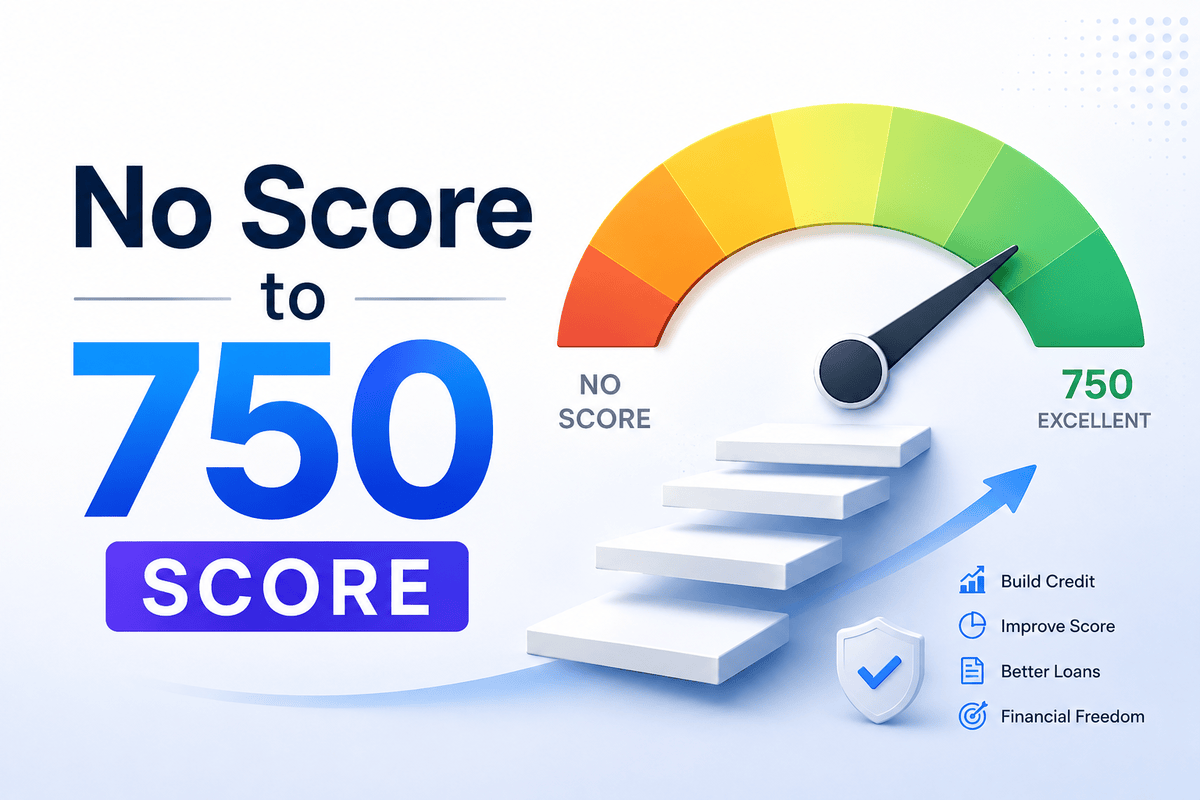
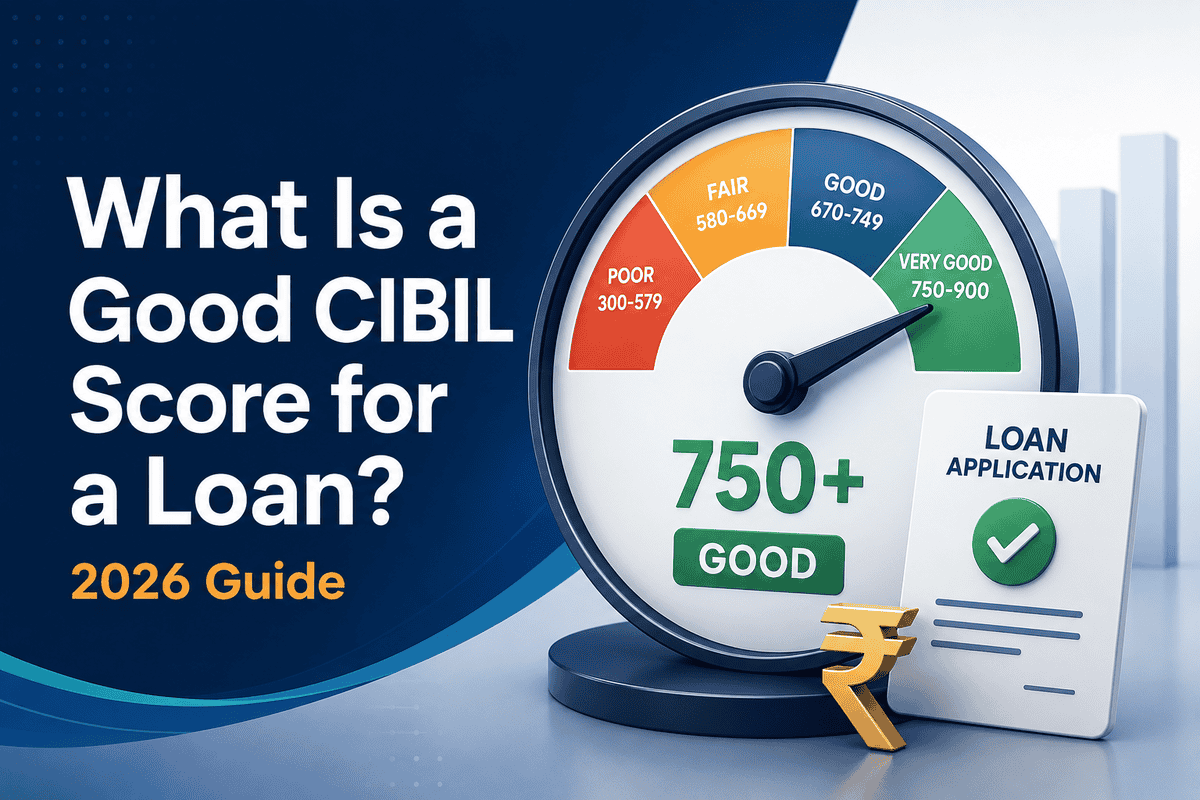
A CIBIL score of 750 or above is generally considered a strong score for a loan in India. It can improve your chances of approval and may help you qualify for more favourable terms. However, there is no single minimum CIBIL score that applies to every lender or loan.
Some lenders may consider applicants with lower scores based on income, repayment history, existing debt and their own eligibility criteria. Current lender guidance also shows that thresholds can vary; for example, IDFC FIRST Bank says eligible applicants may get its FIRSTmoney Personal Loan with a CIBIL score of 710 or above.
What Is Considered a Good CIBIL Score?
A CIBIL score is a three-digit number that ranges from 300 to 900. It is based on your credit history and helps lenders assess your credit behaviour and potential repayment risk. TransUnion CIBIL confirms that higher scores indicate lower credit risk.
For someone planning to borrow, 750+ is a sensible target. TransUnion CIBIL's current published consumer score tiers place 731–770 in the Prime category, 771–790 in Prime Plus and 791–900 in Super Prime.
That doesn't mean a score below 750 automatically leads to rejection. Lenders look at much more than your credit score. Your income, existing EMIs, repayment history, employment or business stability, loan amount and other factors can all influence the final decision.
In other words, your CIBIL score matters, but it is only one part of your loan application.
CIBIL Score Ranges and What They Mean
The following table gives a simple, borrower-friendly view of how different score ranges may affect your loan options:
CIBIL Score | General Position | What It Can Mean for a Loan |
750–900 | Strong | Better chances of approval and potentially more favourable terms |
700–749 | Good | Approval may be possible, depending on the lender and your overall profile |
650–699 | Moderate | Some lenders may consider you, but options or terms may be more limited |
Below 650 | Low | Approval can be more difficult, particularly for unsecured loans |
These are general guidelines, not fixed lender rules. Different lenders use different credit policies, and the same score can lead to different outcomes for different borrowers.
For example, a person with a 700 score and stable income, low existing debt and a clean repayment record may have a stronger application than someone with a higher score but heavy existing obligations.
What Is a Good CIBIL Score for a Personal Loan?
A personal loan is an unsecured loan, so you generally don't provide property or another asset as collateral. Because the lender doesn't have an asset securing the loan, your credit profile can play an important role in the application.
A CIBIL score of 750 or above is a strong target for a personal loan. It can put you in a better position when lenders assess your application and may help you qualify for more competitive terms.
However, there is no universal minimum CIBIL score for every personal-loan lender. Current lender policies show that the threshold can vary. For instance, IDFC FIRST Bank currently says its FIRSTmoney Personal Loan can be available to eligible applicants with a CIBIL score of 710 or above.
This is why you shouldn't assume that a score below 750 automatically means you cannot get a personal loan.
Can You Get a Personal Loan With a 650 CIBIL Score?
A 650 CIBIL score does not automatically mean your application will be rejected. However, getting an unsecured personal loan may be more difficult, and your choice of lenders could be narrower.
The lender may look more closely at:
Your monthly income
Existing EMIs and other debts
Employment or business stability
Previous repayment behaviour
Credit-card utilisation
Recent credit enquiries
The amount you want to borrow
If your score is around 650 and the loan isn't urgent, improving your credit profile before applying may put you in a stronger position.
What CIBIL Score Is Needed for a Home Loan?
Home loans are different from personal loans because they are secured loans. The property being financed generally provides security to the lender.
There is no single CIBIL score that guarantees home-loan approval. However, 750 or above is a strong score to aim for if you're planning to apply.
Some lenders may consider borrowers with lower scores, depending on their credit policy and the rest of the applicant's financial profile.
For a home loan, lenders may also assess:
Your income and repayment capacity
Existing loans and financial obligations
Employment or business stability
The value and details of the property
The amount you want to borrow
Your repayment history
So, while your CIBIL score matters, home-loan approval isn't based on that number alone.
Personal Loan vs Home Loan: Does the CIBIL Requirement Differ?
Factor | Personal Loan | Home Loan |
Loan type | Unsecured | Secured |
Strong CIBIL target | 750+ | 750+ |
Below 750 | May still be possible | May still be possible |
Other important factors | Income, debt, repayment history | Income, debt, repayment history, property |
Approval | Depends on complete borrower profile | Depends on borrower and property profile |
The important takeaway is that 750+ is a useful benchmark, not a universal minimum.
Does Your CIBIL Score Affect Your Interest Rate?
It can.
A higher CIBIL score generally indicates a stronger credit profile and lower perceived credit risk. As a result, a lender may be more comfortable offering you favourable loan terms.
Current lender guidance also links stronger credit scores with better loan terms. IDFC FIRST Bank, for example, says that a higher CIBIL score can improve the chances of faster approval and better interest rates.
However, your CIBIL score doesn't determine your interest rate on its own. The lender may also consider your income, loan amount, existing obligations, employment profile, loan type and other details.
So, don't think of 750 as a magic number that guarantees the lowest rate. Think of it as a strong starting point.
What Else Do Lenders Check Before Approving a Loan?
Even a 750+ CIBIL score doesn't guarantee loan approval. Current lender guidance specifically notes that applications can still be rejected because of factors such as income stability, debt levels, multiple recent enquiries or documentation issues.
Income and repayment capacity
Lenders want to know whether you can comfortably manage the new EMI along with your existing financial commitments.
Existing debt
If a large portion of your monthly income already goes towards EMIs or credit-card payments, taking another loan may increase your repayment burden.
Repayment history
Regularly paying EMIs and credit-card bills on time helps demonstrate responsible credit behaviour.
Recent credit applications
Applying for several loans or credit cards in a short period can result in multiple credit enquiries and may influence a lender's assessment.
Loan amount
The amount you request should be reasonable in relation to your income and existing obligations.
This is why two people with the same CIBIL score can receive different loan decisions.
What Should You Do If Your CIBIL Score Is Below 750?
If your score is below your target, don't rush to submit multiple loan applications. Start by understanding what's affecting your credit profile.
Pay your EMIs and credit-card bills on time.
Missed or delayed payments can hurt your credit profile. Consistent repayment is one of the simplest habits you can build.
Keep your credit utilisation under control.
Try not to regularly use a very high portion of your available credit-card limit.
Avoid unnecessary credit applications.
Check your eligibility before applying rather than submitting applications to several lenders at the same time.
Review your CIBIL report.
Check your accounts, payment history and personal details for errors. If you find inaccurate information, you can raise a dispute with CIBIL or the relevant lender. TransUnion CIBIL provides a process for consumers to raise disputes over inaccuracies in their credit reports.
Give your credit profile time.
There is no overnight solution for a low score. Consistent financial behaviour over time is more useful than making several changes immediately before applying for a loan.
If you want a more detailed guide, read how to improve your CIBIL score.
You can also learn about how long it takes to improve your CIBIL score.
If you are new to borrowing, you can also explore our guide on getting a loan with no credit history.
How Credit Assist Can Help
Knowing your CIBIL score is useful. But knowing what is affecting it and what you can do next can be even more valuable.
Credit Assist helps you get a clearer picture of your credit profile and identify areas that may need attention. Instead of simply looking at a score, you can use those insights to understand your borrowing behaviour and make more informed financial decisions.
If you're preparing to apply for a loan or want to build a stronger credit profile for the future, understanding where you stand is a good place to start.
Explore the Credit assist pricing
Conclusion: Is 750 a Good CIBIL Score?
Yes. A CIBIL score of 750 or above is a good benchmark if you're planning to take a loan. It can strengthen your application and may help you qualify for better loan terms.
But 750 isn't a magic number. There is no universal minimum CIBIL score for every personal loan or home loan. Lenders look at your complete financial picture, including your income, existing debt, repayment history and the type and amount of loan you're requesting.
If your score is below 750, that doesn't necessarily mean you can't borrow. It simply means you may need to pay closer attention to your options and work on the factors that could be affecting your credit profile.
Before applying, check your credit report, understand the lender's eligibility criteria and make sure the EMI fits comfortably within your budget.
A good CIBIL score can open more doors. Healthy financial habits help keep them open.
Disclaimer: CIBIL score requirements vary by lender and loan product and may change over time. A particular CIBIL score does not guarantee loan approval, a specific interest rate or a particular loan amount. Always check the latest eligibility criteria and terms directly with the lender before applying.
Frequently Asked Questions
What is the minimum CIBIL score for a personal loan?
Can I get a loan with a 650 CIBIL score?
What CIBIL score is needed for a home loan?
Does a higher CIBIL score lower my interest rate?
What is the ideal CIBIL score in India?
About the Author
Himanshu Mishra
@himanshu
View all posts →