What Is Credit Mix and How It Affects Your CIBIL Score
❤️ Spread the Love
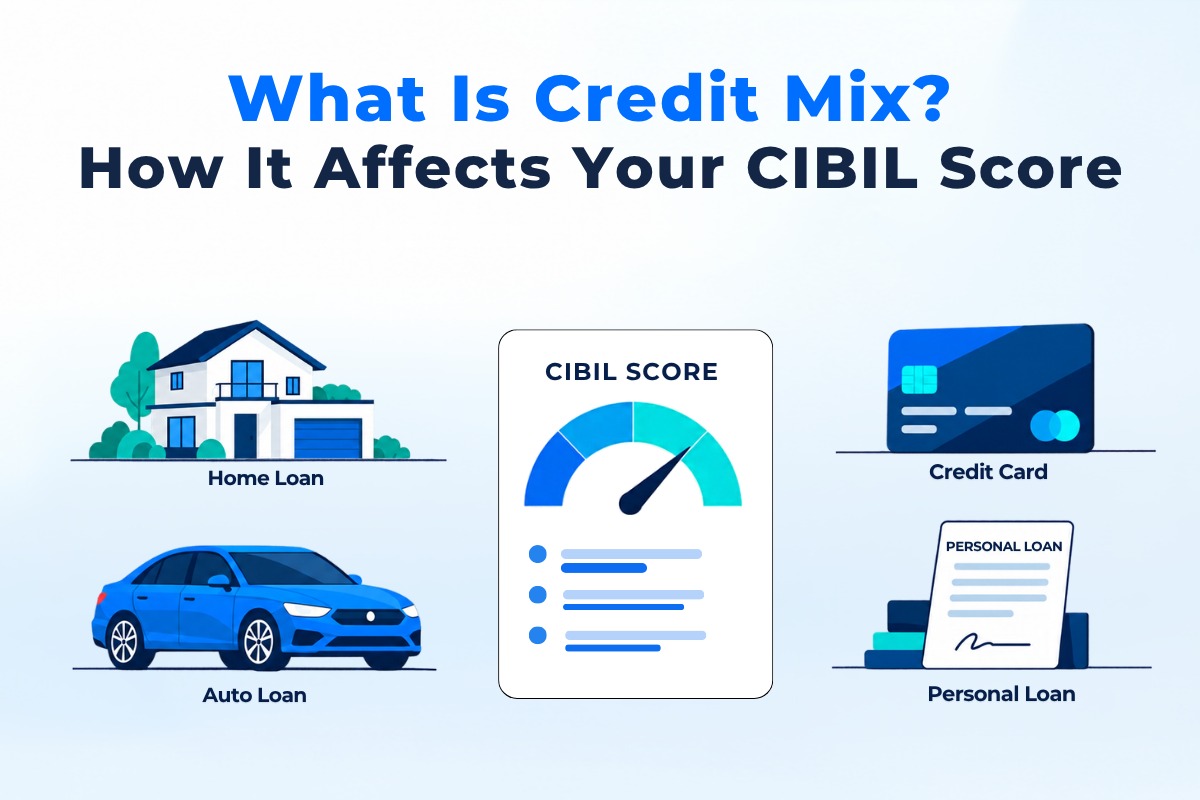
Credit mix refers to the variety of credit accounts in your credit report, particularly secured loans such as home loans and car loans, and unsecured credit such as personal loans and credit cards. It contributes to your CIBIL score, but payment history and credit utilisation matter more. You do not need to borrow more money simply to create a better mix.
What Is Credit Mix?
Credit mix is the combination of secured and unsecured credit accounts in your borrowing history. It helps lenders understand the types of credit you have managed, alongside your repayment record, outstanding balances and other information in your credit report.
For example, a person who has managed a home loan and a credit card responsibly has experience with two different forms of credit. A borrower with only credit cards has a different credit profile. Neither situation alone determines whether the person has a good credit score.
Credit mix is one factor in credit assessment, not a checklist that every borrower must complete. Lenders may also consider income, existing obligations, repayment capacity and their own eligibility criteria when reviewing an application.
What Is the Difference Between Secured and Unsecured Credit?
Secured credit is backed by collateral, while unsecured credit does not require an asset to be pledged as security. Both types can appear in your credit history, but they involve different borrowing arrangements and repayment obligations.
Feature | Secured credit | Unsecured credit |
Meaning | The loan is backed by collateral | No collateral is generally required |
Common examples | Home loan, car loan, loan against property, loan against a fixed deposit | Personal loan, credit card |
Security for the lender | The pledged asset provides security, subject to the loan terms and applicable law | The lender relies more heavily on the borrower’s creditworthiness and repayment capacity |
Repayment structure | Often paid through scheduled instalments | May involve fixed EMIs or revolving credit card payments |
Credit-report relevance | Shows how the borrower manages secured borrowing | Shows how the borrower manages unsecured borrowing |
A borrower with both types of accounts may demonstrate experience managing different credit arrangements. However, taking out a loan or applying for a credit card solely to add variety can increase costs and financial pressure without guaranteeing a higher score.
How Much Does Credit Mix Affect Your CIBIL Score?
The brief estimates that credit mix accounts for about 10% of the CIBIL score, making it a contributing factor rather than the main driver. TransUnion CIBIL confirms that credit mix matters, but says it does not outweigh timely repayments or responsible credit use.
This distinction is important because some borrowers focus on adding more credit products while overlooking overdue EMIs or high credit card balances. Those habits can undermine credit health even if the profile contains different types of accounts.
Your credit score reflects several aspects of your credit history, including:
Payment history: Whether you have paid EMIs and credit card bills on time.
Credit utilisation: How much of your available revolving credit you are using.
Credit mix: The variety of credit types reflected in your history.
Length of credit history and enquiries: Other details that may contribute to how your profile is assessed.
The exact score calculation is proprietary, and the effect of changing one factor varies by profile. Do not expect a specific number of points simply because you add a secured loan or repay a personal loan.
What Does a Healthy Credit Mix Look Like?
A healthy credit mix is one that develops naturally from borrowing needs and remains affordable to manage. It may include secured and unsecured accounts, but there is no single combination that guarantees approval or a particular credit score.
Consider these examples:
A home loan and a credit card: The borrower manages a long-term secured loan alongside revolving credit.
A car loan and a credit card: The borrower has experience with installment payments and card repayments.
Only a credit card: The profile may still demonstrate responsible credit behaviour through timely payments and sensible utilisation.
A personal loan with other existing credit: The mix may be varied, but the total EMI burden and repayment record remain important.
Having only one type of credit does not automatically mean your credit profile is poor. The more important question is whether your borrowing is appropriate for your needs and whether you can meet every repayment obligation comfortably.
How Can You Improve Your Credit Mix Without Taking Unnecessary Debt?
You can build a stronger credit profile by managing the credit you genuinely need, maintaining timely repayments and reviewing your credit report for errors. There is no need to take an additional loan merely to create a more varied mix.
Use these practical steps:
Review your existing accounts: Check which secured loans, personal loans and credit cards appear on your report. Confirm that the balances and account statuses are accurate.
Pay on time. Set reminders or payment instructions for EMIs and card bills so that a missed due date does not damage your repayment record.
Manage credit utilisation: Avoid consistently using most of your available credit limit. Lower utilisation can support a healthier credit profile, although no single percentage guarantees a specific score. See credit utilisation and the 30% rule
Borrow only when there is a genuine need: Compare the total cost, interest rate, fees and monthly repayments before taking a new loan.
Limit unnecessary applications: Multiple credit applications over a short period can result in several lender enquiries and may concern lenders reviewing your profile.
Check your report regularly: If an account, balance or repayment entry looks incorrect, raise the issue with the lender and follow the bureau’s dispute process.
A practical credit score improvement plan should focus on the factors you can control consistently, rather than adding credit products to achieve a particular mix.
Should You Take a Loan Just to Improve Your Credit Mix?
No. Taking a loan solely to diversify your credit mix is generally not a sound financial decision because it creates a repayment obligation, may involve interest and fees, and does not guarantee a better score.
Before applying, ask yourself whether you need the funds, can afford the repayments and have compared the borrowing cost with other options. A loan that strains your monthly budget can lead to missed payments, which may do more harm than any potential benefit from a varied credit profile.
If you already have a credit card, use it within your budget and pay the bill on time. If you need a loan for a planned expense, compare eligible offers and assess affordability instead of borrowing simply to influence your score. The aim is not to hold as many types of credit as possible. It is to demonstrate responsible borrowing over time.
How Credit Assist Can Help You Understand Your Credit Profile
Credit Assist can help you review your credit health and understand which areas of your profile may need attention. Checking your credit information regularly can help you identify account details that need correction and make more informed decisions before applying for credit.
Use your report to review repayment history, outstanding balances and the accounts associated with your profile. If you are unsure what to prioritise, focus first on accurate reporting, on-time repayments and manageable credit usage rather than applying for new credit products.
A Credit builder approach is about establishing sustainable financial habits, not borrowing more than you need. Credit Assist can be part of that process by helping you understand your credit health as you work towards your financial goals.
Conclusion
Credit mix contributes to your credit profile, but it should develop through genuine borrowing needs. Pay on time, manage utilisation, check your report and avoid unnecessary debt. Focus on consistent credit behaviour to support long-term financial health. explore the Credit Assist plan.
Frequently Asked Questions
What Is Credit Mix?
How Much Does Credit Mix Affect My CIBIL Score?
What Is a Good Credit Mix?
Should I Take a Loan Just to Improve My Credit Mix?
Does Having Only Credit Cards Hurt My Score?
About the Author
Khushi Mishra
@khushi.mishra@paymeindia.in
View all posts →