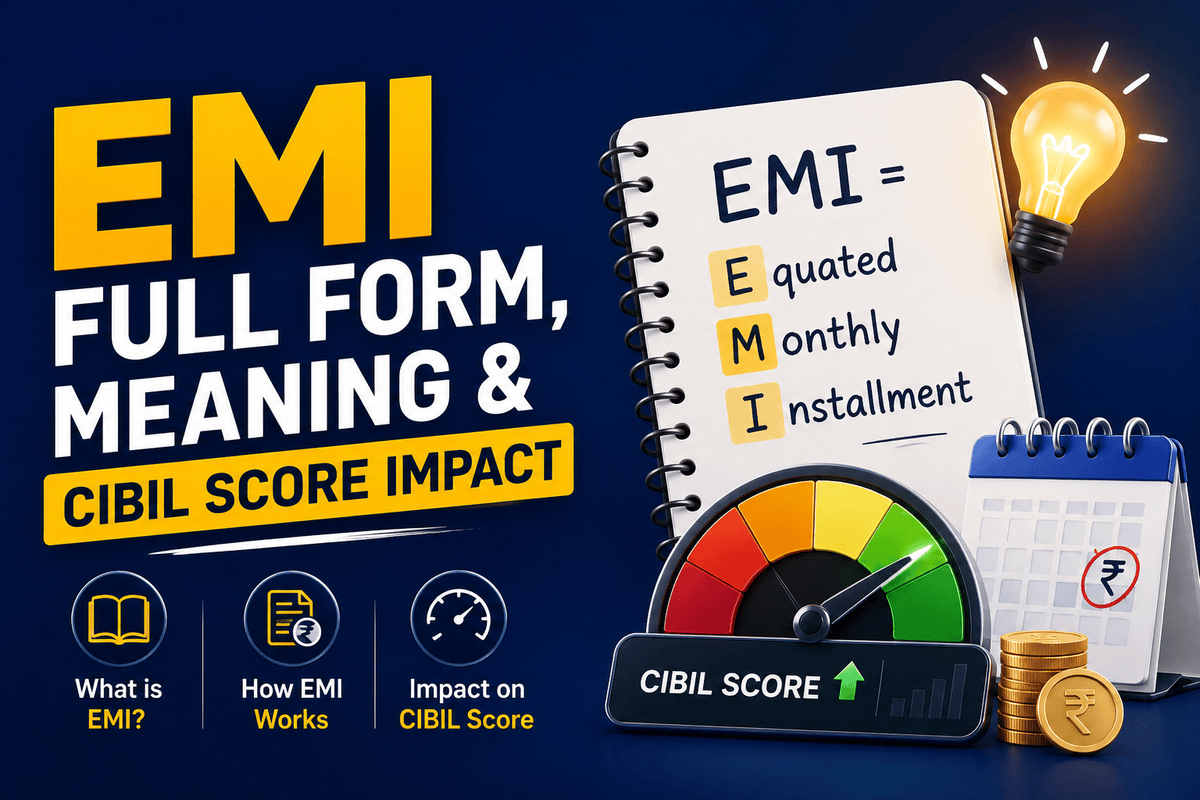
Fake Loan or Identity Theft on Your Credit Report: How to Fix It
❤️ Spread the Love
Finding a loan on your credit report that you never applied for is a genuinely unsettling moment. It usually points to one of two things: a lender has made a reporting error, or someone has used your identity to borrow in your name. Either way, it needs sorting quickly, because for every month it sits there it quietly drags down your score and your ability to borrow.
Here is the short version. To remove a fake loan from your credit report, log in to the CIBIL dispute portal, raise a dispute against the account, and select the reason "Account does not belong to me". CIBIL forwards your case to the lender, who must verify and correct it, usually within 30 to 90 days. If the loan is the result of identity theft, also report it at cybercrime.gov.in or on the 1930 helpline and secure your accounts straight away.
The rest of this guide walks through each step properly, including the identity-theft protection layer that most articles leave out.
Fake loan, or your own forgotten one?
Before you raise anything, take two minutes to confirm what you are actually looking at. Not every unfamiliar entry is fraud, and disputing a loan that turns out to be yours only costs you time.
Run through a few checks. Is the lender a bank or NBFC you have dealt with before, perhaps through a co-branded card, a "buy now, pay later" account, or a small loan taken at a shop checkout? These often show up under a parent company's name you would not immediately recognise. Compare the account's open date and amount against your own memory and old emails.
If the loan is recent, the amount is unfamiliar, and the lender is one you have never approached, treat it as a likely fraud loan on CIBIL and dispute it. If it turns out to be an old product you had simply forgotten, it is not fraud, and you manage it like any other account. When you genuinely cannot tell, ring the lender named on the entry and ask them directly before doing anything else.
Signs it is a fraud loan and not your own:
A few clues usually separate real fraud from a forgotten account. Treat a loan not taken by you seriously if two or more of this line up:
The lender is a name you have never dealt with, even after checking parent companies.
The account opened on a date when you had applied for nothing.
The amount, EMI, or loan type matches nothing you have ever used.
A hard enquiry from the same unknown lender sits on your report around the same date.
The address or contact details on the entry are slightly wrong, which often happens when someone else fills in your forms.
When the pattern fits, stop second-guessing, raise the dispute, and move straight on to the protection steps below.
Why this happens: PAN and identity misuse
A fake loan almost always traces back to your identity documents ending up in the wrong hands. Your PAN is the thread that ties every loan and card to your credit file, so PAN misuse is the most common route in. With your PAN, plus a forged or stolen ID and address proof, a fraudster can apply for credit in your name, especially through quick digital lenders that run lighter checks.
Documents leak in ordinary, everyday ways. A photocopy handed over at a hotel or to a property agent, a data breach at a company you once dealt with, a phishing link that captured your details, or a loan app that quietly harvested more than it needed. Occasionally it is closer to home, where someone you know has used your papers.
You do not need to know exactly how it happened to put it right. But recognising that identity theft on a credit report in India nearly always begins with a leaked PAN helps you protect yourself properly once the dispute is under way. An early warning sign worth watching for is an unfamiliar hard enquiry on your report, which often appears before the fraudulent loan itself does.
How to remove a fake loan from your Credit report, step by step:
This is the core of the fix, and the process is the same whether the entry is a lender error or outright fraud. The single most important detail is the dispute reason, so choose it with care.
The dispute reason to select is Account does not belong to me.
Get your credit report and note the fraudulent account in full: the lender's name, the account number, the amount, and the open date.
Log in to the official credit dispute portal using your registered details or start the online dispute from your report.
Raise a dispute against that specific account and select the reason "Account does not belong to me".
Email the lender separately, state clearly that you never took the loan, and attach your PAN, ID, and address proof.
Save every reference number, email, and acknowledgement, because credit cannot alter lender data by itself and will pass your dispute to the lender to verify.
Wait for the lender's verification and then check your updated report, which usually takes 30 to 90 days.
One point is worth understanding clearly. credit is the messenger here, not the judge. It forwards your dispute to the lender that reported the loan, and that lender is the one that must investigate and respond. This is exactly why contacting the lender directly, in parallel with the online dispute, tends to speed things up. For the wider picture on correcting inaccurate entries, see our guide on the 7 CIBIL report errors hurting your score.
If it is identity theft, protect yourself:
Removing the loan deals with the symptom. If your identity has been stolen, you also have to shut the door the fraudster came through, or they will simply borrow in your name again. Do these as soon as the dispute is raised.
File a cyber-crime complaint: Report the fraud at cybercrime.gov.in or call the national helpline in 1930, run by the Ministry of Home Affairs. For a loan taken in your name, lodge an FIR or a formal complaint with your local police or cyber cell and keep a copy. Lenders act faster when you can show them an official complaint.
Notify all four credit bureaus: A fraudster may have applied in more than one place, so alert TransUnion CIBIL, Experian, Equifax, and CRIF High Mark, not only the bureau showing the loan. Ask each what fraud protection they can place on your file.
Secure your accounts: Change the passwords on your banking, email, and UPI apps, and switch on two-factor authentication (2FA) everywhere it is offered. Your email is the master key to most other accounts, so lock that down first.
Consider a credit freeze or fraud alert: Ask the bureaus and your bank what options exist to flag your profile, so any new application in your name faces extra scrutiny while the matter is being resolved.
How long does it take, and how to follow up?
Timelines vary between lenders, but there is a clear window you can hold them to.
Typical resolution time: 30 to 90 days.
Under RBI rules, credit information companies and lenders are expected to investigate and resolve a dispute within around 30 days of it being raised, though fraud cases that involve a police complaint can run towards the longer end of that range. Check your report at the 30-day mark rather than waiting quietly and hoping.
If nothing has moved, escalate in writing. Contact the lender's grievance officer, quoting your dispute reference and FIR number, and give them a firm deadline. If the lender still fails to act, you can take the matter to the RBI's grievance mechanism. Persistence is what wins these cases, and a clean paper trail is your strongest tool. Our overview of your rights under RBI credit reporting rules sets out exactly what lenders are obliged to do.
How to prevent PAN and identity misuse?
Once your report is clean, a few habits keep it that way.
Share your PAN and ID only when it is genuinely required, and when you must hand over a photocopy, write the purpose and date across it so it cannot be reused elsewhere. Avoid uploading documents to unverified loan apps and confirm that any lender is registered with the RBI before you share anything at all.
Monitor your credit report regularly, at least once every few months, so an unauthorised loan is caught within weeks rather than discovered after a rejection. Use strong, unique passwords, keep 2FA switched on, and treat any message asking you to "verify" your PAN or KYC with suspicion, as these are classic phishing hooks designed to harvest exactly the documents a fraudster needs.
None of this is dramatic, but it works. Most identity fraud succeeds for two dull reasons: documents shared carelessly and reports that are never checked. Both are entirely within your control.
How Credit Assist helps?
Sorting a fraudulent loan on your own is possible, but it is slow and stressful, particularly when a lender goes quiet or a dispute stall with no explanation. This is where having someone in your corner earns its keep.
Credit Assist helps you pinpoint the fraudulent entry, raise the dispute correctly the first time so it is not rejected on a technicality, and keep the pressure on the lender until the account is removed and your report reads clean. We also guide you through the protection steps, from bureau notifications to locking down your accounts, so the fraud does not simply repeat. If a stubborn lender or a wrongly reported loan is holding you hostage, this is far quicker than fighting it alone.
Conclusion:
A fake loan on your credit report is alarming, but it is fixable. Confirm the entry is not simply an old account of your own, raise a dispute with the reason "Account does not belong to me", and if it is fraud, back it up with a cyber-crime complaint and tighter security on your accounts. Then hold the lender to the 30-to-90-day window and follow up until your report is clean.
The sooner you act, the less damage it does. Check your report today, and if you would rather not take on the lenders alone, Credit Assist can carry it from here.
Frequently Asked Questions
How do I remove a loan I never took from credit?
Which dispute should I select?
How long does it take to remove a fraud loan?
Should I file a police complaint for a fake loan?
Can someone take a loan on my PAN?
About the Author
Khushi Mishra
@khushi.mishra@paymeindia.in
View all posts →