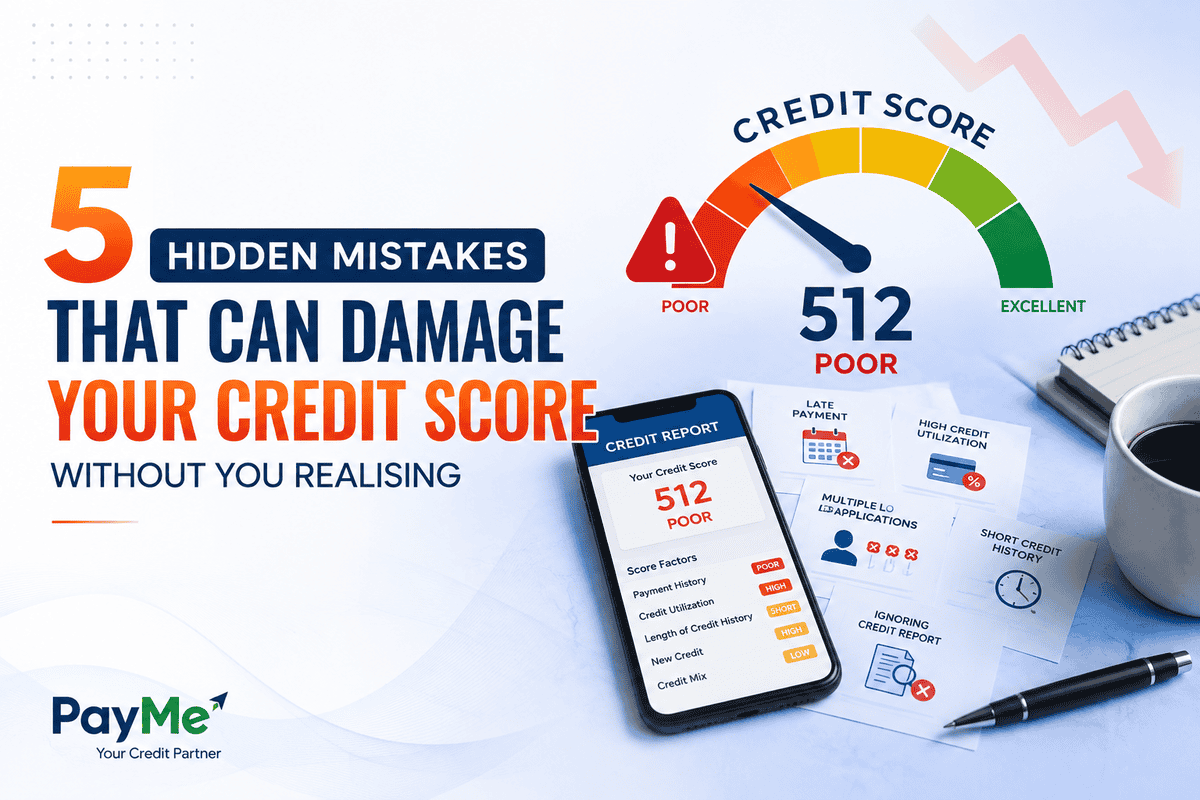
5 Hidden Mistakes That Can Damage Your Credit Score Without You Realising
❤️ Spread the Love
Your credit score plays an important role in your financial life. Whether you're applying for a personal loan, home loan, credit card, or even looking for better interest rates, lenders often evaluate your creditworthiness before making a decision.
Most people know that missing EMIs or defaulting on loans can lower their credit score. However, many borrowers are unaware that certain everyday financial habits can quietly affect their credit profile—even if they've never missed a payment.
If you've been wondering why your credit score isn't improving despite being financially responsible, you may be making one or more mistakes that hurt your credit score without even realising it.
In this guide, we'll explore five common yet overlooked credit mistakes and explain how you can avoid them to build a stronger financial future.
Why Your Credit Score Matters
A credit score is more than just a number. It reflects how responsibly you've managed credit over time. Banks and financial institutions use this score to assess the level of risk involved in lending money to you.
A healthy credit score can help you:
Get quicker loan approvals
Qualify for better interest rates
Increase your chances of higher credit limits
Build trust with lenders
On the other hand, a low score may result in loan rejections, lower credit limits, or higher borrowing costs.
That's why identifying and avoiding mistakes that hurt your credit score is essential.
1. Using Too Much of Your Credit Card Limit
One of the most common credit score mistakes is maintaining a high credit utilisation ratio.
Credit utilisation refers to the percentage of your available credit limit that you're using.
For example, if your credit card limit is ₹1,00,000 and your outstanding balance is ₹75,000, your credit utilisation is 75%.
Even if you pay the entire bill before the due date, consistently using a large portion of your available limit may signal higher credit dependency.
Financial experts generally recommend keeping your credit utilisation below 30%.
How to avoid it
Pay your credit card bill before the statement is generated whenever possible.
Split large expenses across billing cycles if practical.
Request a higher credit limit only if you can continue using credit responsibly.
2. Applying for Multiple Loans or Credit Cards in a Short Time
Many borrowers apply for several credit cards or loans hoping that at least one application will be approved.
Unfortunately, every loan or credit card application may result in a hard inquiry on your credit report.
Several hard inquiries within a short period can indicate financial stress to lenders and may temporarily reduce your credit score.
This is one of the most overlooked mistakes that hurt your credit score.
How to avoid it
Apply for credit only when necessary.
Compare eligibility before submitting applications.
3. Closing Your Oldest Credit Card
It may seem like a good idea to close an unused credit card, especially if you no longer need it.
However, older credit accounts contribute to the length of your credit history, which is an important factor in credit scoring.
Closing your oldest credit card can reduce your average account age and may also increase your credit utilisation ratio if your overall available credit decreases.
How to avoid it
Keep older credit cards active if they don't have high annual fees.
Use them occasionally for small purchases and pay the balance in full.
Close only those cards that are no longer financially beneficial.
4. Ignoring Errors in Your Credit Report
Many people assume their credit report is always accurate.
In reality, mistakes such as incorrect payment status, duplicate loan accounts, outdated information, or loans that don't belong to you can appear in your credit report.
These errors may negatively affect your credit score without you being aware of them.
Regularly reviewing your credit report helps identify discrepancies before they become major problems.
How to avoid it
Check your credit report periodically.
Verify account details and repayment history.
Raise a dispute immediately if you notice incorrect information.
5. Becoming a Guarantor or Co-Applicant Without Understanding the Risk
Helping a friend or family member secure a loan may seem like a kind gesture.
However, when you become a guarantor or co-applicant, you're also accepting financial responsibility for that loan.
If the primary borrower misses payments or defaults, it can affect your credit profile as well.
Many borrowers don't realise this until they apply for a loan themselves.
How to avoid it
Understand your legal and financial responsibilities before agreeing.
Monitor the repayment status whenever possible.
Only become a guarantor for someone you completely trust.
Additional Habits That May Affect Your Credit Score
Apart from the five major mistakes, a few other habits can also influence your credit profile over time:
Missing even a single EMI or credit card payment
Frequently paying only the minimum amount due on your credit card
Defaulting on small loans
Ignoring overdue utility or postpaid bills if reported by lenders
Taking on more debt than you can comfortably repay
Developing responsible financial habits is one of the most effective ways to maintain a healthy credit score.
How to Build a Better Credit Score
Improving your credit score doesn't happen overnight, but consistent financial discipline can make a noticeable difference over time.
Some good practices include:
Pay every EMI and credit card bill on time.
Keep your credit utilisation below 30%.
Avoid unnecessary loan applications.
Maintain a healthy mix of secured and unsecured credit.
Review your credit report regularly.
Don't close your oldest credit accounts without a valid reason.
These habits demonstrate responsible borrowing behaviour and contribute positively to your overall credit profile.
How Credit Assist Can Help
Understanding your credit score is the first step toward improving it.
Credit Assist helps you monitor your credit profile, identify areas that need attention, and make informed financial decisions. By tracking your credit health regularly, you can spot potential issues early and take corrective action before they affect your borrowing opportunities.
Whether you're planning to apply for a personal loan, a home loan, or a credit card, maintaining a healthy credit profile can improve your chances of approval and help you access better financial products.
Conclusion
Many people believe that only missed payments or loan defaults reduce their credit score. However, several mistakes that hurt your credit score often go unnoticed until they begin affecting your borrowing ability.
Using too much of your credit limit, applying for multiple loans, closing old credit cards, ignoring credit report errors, and becoming a guarantor without understanding the risks are all habits that can quietly damage your credit profile.
The good news is that these mistakes are avoidable. By adopting responsible financial habits and monitoring your credit regularly, you can protect your score and improve your long-term financial health.
Remember, a strong credit score isn't built through shortcuts—it's built through consistency, awareness, and informed financial decisions.
Frequently Asked Questions
What are the biggest mistakes that hurt your credit score?
Does applying for multiple loans affect my credit score?
Can errors in my credit report reduce my credit score?
Is it bad to close an old credit card?
About the Author
Himanshu Mishra
@himanshu
View all posts →