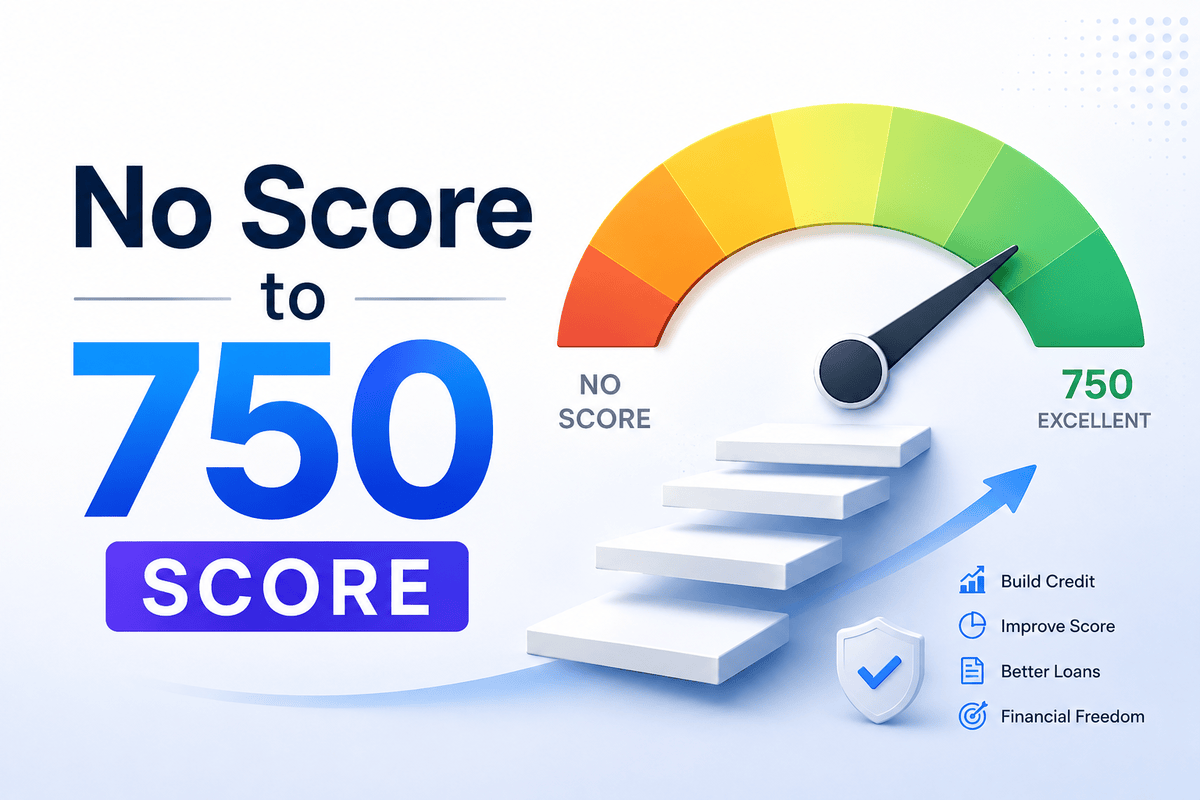
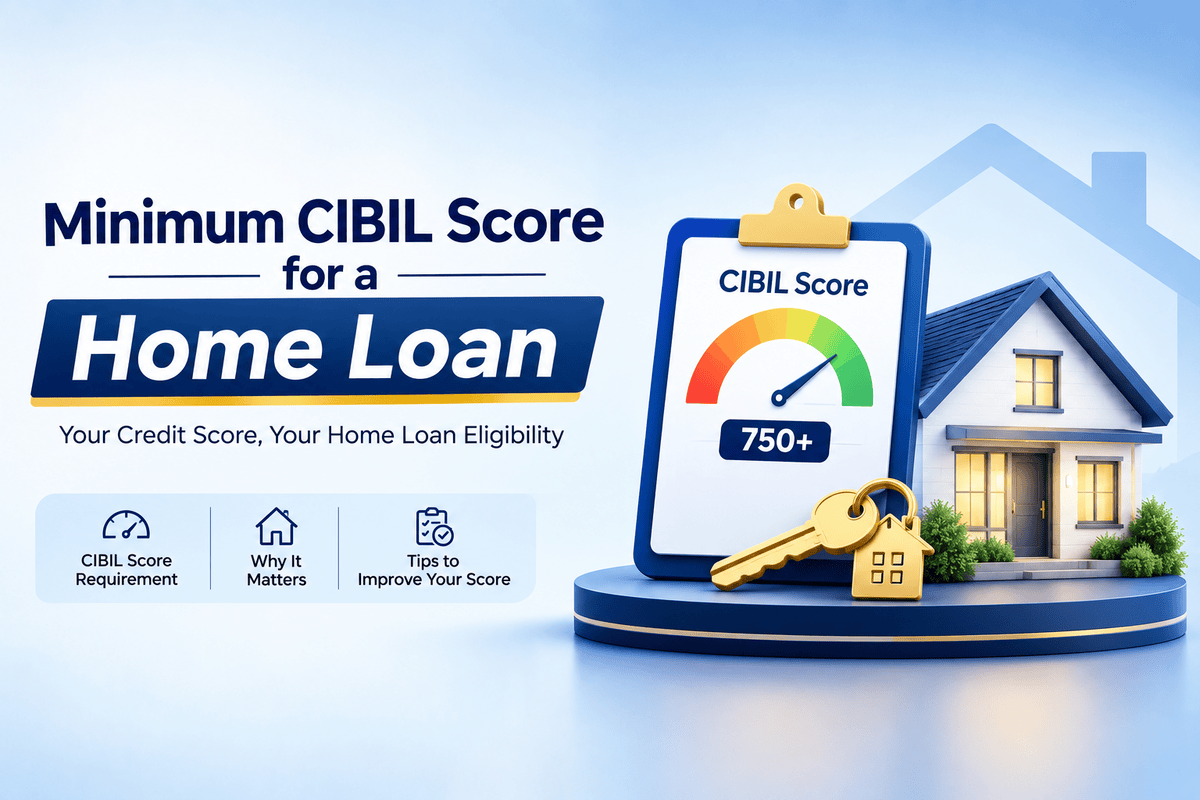
Minimum CIBIL Score Required for a Home Loan: Eligibility & Requirements
❤️ Spread the Love
Buying a home is likely the biggest financial decision you will ever make, and long before you shortlist properties, one number quietly decides your options: your credit score. If you plan to apply soon, the minimum CIBIL score for a home loan is the first thing worth checking, because it shapes whether you are approved, how much you can borrow, and the rate you pay. A strong CIBIL score for a home loan can save you lakhs over the years, while a weak one can cost you just as much. Here is exactly what lenders look for.
What is the minimum CIBIL score for a home loan?
Most lenders prefer a CIBIL score of 750 or above for a home loan, as it signals low risk and unlocks the best interest rates. Scores between 700 and 749 are usually approved at slightly higher rates, while a score below 650 often leads to rejection or much stricter terms.
In practice, there is no single minimum CIBIL score for a home loan fixed across the industry, since every lender sets its own bar. Some banks approve from 650 with conditions, while housing finance companies like Bajaj set their threshold around 725. Still, 750 is the number most treat as the comfortable green zone, and it is the score worth aiming for before you apply. The reason 750 carries such weight is simple: at that level, lenders read you as a low-risk borrower who has consistently paid on time, which is exactly the reassurance they need on a loan that runs for decades.
CIBIL score bands for home loans:
Here is how lenders generally read your score when they assess your home loan eligibility:
CIBIL score band | Approval odds | Likely impact on your rate |
750-900 | Strong. Fast approval, higher loan amount | Best, lowest interest rates |
700-749 | Good. Usually approved | Slightly higher rate |
650-699 | Borderline. Possible with conditions | Higher rate; co-applicant or extra documents likely |
Below 650 | Weak. Often declined by banks | NBFCs may consider, at a much higher rate |
A 750 score for a home loan is not a legal rule, but it is the practical point where approvals get easy and rates turn friendly. Below 700, you are not out of the running, but you should expect closer scrutiny.
If your score sits below 650 today, banks will likely hesitate, but the door is not shut. Housing finance companies and NBFCs are usually more flexible on a low credit score for a home loan, though they price that risk with a higher rate. Offering a larger down payment also helps, because a lower loan-to-value ratio reduces the lender's exposure and can tip a borderline application into approval.
Why home loans have stricter score requirements?
A home loan is a 20-to-30-year commitment for a large sum, so lenders study your credit score for a housing loan far more closely than they would for a small personal loan. The longer the tenure and the bigger the amount, the more a lender stands to lose if repayments stop, so they lean heavily on your track record to judge future risk.
This is why a score that comfortably gets a credit card approved can still fall short for a home loan. Lenders are not reacting to your present EMI; they are pricing two decades of it. The property does act as security, but repossessing and selling a home is a slow, last resort process no lender wants, so they would far rather lend to someone whose record says they will simply keep paying. As a result, the home loan eligibility bar sits higher by design, and your repayment history matters more here than almost anywhere else.
How your CIBIL score changes the interest you pay?
This is where your score turns into real money. Even a small gap in your home loan interest rate, tied directly to your CIBIL score, compounds into a large sum over a long tenure.
Take a ₹50 lakh home loan over 20 years. A borrower with a strong score might be offered around 8.5%, while a weaker score could mean roughly 9.5%. That single percentage point sounds minor, but the numbers are not:
At 8.5%, the EMI is about ₹43,400, and you pay roughly ₹54.1 lakh in interest over the full tenure.
At 9.5%, the EMI rises to about ₹46,600, and total interest climbs to around ₹61.9 lakh.
That is nearly ₹7.7 lakh in extra interest, and about ₹3,200 more every single month, for the exact same home, purely because of a lower score. (Figures are illustrative; real rates vary by lender and change over time.) Viewed this way, lifting your credit score for a home loan before you apply is not paperwork, it is one of the highest-return financial moves available to you.
The benefit is not limited to the rate, either. A stronger score often means a larger sanctioned amount and more room to negotiate on processing fees, while a weaker one can shrink the loan the bank is willing to offer. And since that ₹7.7 lakh gap runs across two decades, even a modest score improvement before you apply keeps money in your pocket that would otherwise go to interest.
Other factors lenders check:
Your score opens the door, but it is not the only thing lenders weigh for home loan eligibility. A good CIBIL score for a home loan improves your terms, yet these factors shape the final decision too:
Income and job stability: a steady salary and a solid employer history reassure lenders you can sustain two decades of EMIs.
FOIR (Fixed Obligations to Income Ratio): the share of your income already committed to EMIs. Most lenders want your total obligations, including the new loan, to stay within roughly 40 to 50% of income.
Loan-to-Value (LTV): how much of the property's value you are borrowing. A larger down payment lowers the lender's risk and can earn you better terms.
Property and legal checks: the home itself must clear the lender's valuation and title verification.
Your age and working years: lenders usually want the loan to close before you retire, so your age can shape the tenure, and therefore the EMI, they offer you.
A high score paired with weak income or a stretched FOIR can still be declined, so treat these as one package rather than a checklist where the score alone wins.
How to improve your CIBIL score before applying?
If your score is not where you want it, it responds well to a few focused habits, ideally started 6 to 12 months before you apply. A good first move is to check your score at least three months ahead, so you have time to act on whatever you find rather than discovering a problem at the application stage. To lift your CIBIL score for a home loan:
Pay every EMI and credit card bill on time, since payment history is the single biggest driver of your score.
Keep your credit utilisation below 30%. Our guide to the 30% utilisation rule shows how to manage it.
Check your report for errors, because a wrong entry can quietly drag a real score down. See the common CIBIL report errors to spot and fix them.
Avoid new loan or card applications in the run-up, as each one adds a hard enquiry.
Keep your oldest credit cards open and lightly active, since a longer credit history works in your favour.
Clear any "settled" status on an old account, which lenders view poorly on a home loan application.
If you want to understand what actually moves the number, our explainer on how a CIBIL score is calculated breaks down each factor in plain terms.
Can a co-applicant help?
Yes, and it is one of the most effective fixes. Adding a co-applicant with a strong CIBIL score and a steady income, often a spouse or parent, can lift both your approval odds and your home loan eligibility, because lenders assess the combined profile rather than yours alone. A co-applicant can also raise the loan amount you qualify for, which helps when property prices stretch your budget.
One caution before you go this route: a co-applicant shares the responsibility fully. If EMIs are missed, both credit scores take the damage, so choose someone who understands and accepts that commitment. There is an upside worth knowing too: when the co-applicant is also a co-owner of the property, each of you can separately claim home loan tax benefits on principal and interest, which can make a joint application more rewarding than going it alone.
Conclusion:
The minimum CIBIL score for a home loan may not be carved in stone, but the message from lenders is consistent: aim for 750 and above, and you put yourself in the strongest position for quick approval, a higher loan amount, and the best home loan interest rate. A little groundwork on your score before you apply can save you several lakhs across the life of the loan.
Check your score early, fix what needs fixing, and apply with confidence. Credit Assist helps you understand your CIBIL score for a home loan, clear errors, and get home-loan ready before you approach a lender.
Frequently Asked Questions
What is the minimum CIBIL score for a home loan?
Can I get a home loan with a 650 CIBIL score?
Does my CIBIL score affect my home loan interest rate?
How can I improve my CIBIL score before applying for a home loan?
Does adding a co-applicant help home loan approval?
About the Author
Khushi Mishra
@khushi.mishra@paymeindia.in
View all posts →